An AI oral assessment is a short, spoken check-in where a student answers a question out loud and the system asks a follow-up based on what they actually said, the way a teacher would if they had time to talk to every student individually. It is not a recorded monologue and not a written quiz read aloud. The follow-up is what does the work.
Ms. Whitfield teaches ninth-grade biology, and she used to grade thirty-two lab write-ups a week wondering how many students actually understood cellular respiration versus how many had copied a lab partner's phrasing. A ninety-second oral check-in after the lab changed that math almost immediately. She still reads every write-up. She just is not guessing anymore.
What an AI oral assessment actually does
Most classroom AI tools either grade what a student already produced or generate content for the teacher. An AI oral assessment does neither. It asks a question tied to the lesson, listens to the student's spoken answer, and then asks one more question based specifically on that answer, the same instinct behind a good Socratic exchange. If a student says photosynthesis "makes food for the plant," a strong follow-up might ask where that food actually gets used, which is a question no canned script could anticipate in advance.
That adaptive step is the entire point. A pre-written list of questions tests whether a student can guess what is being asked. A question that only exists because of what the student just said tests whether they understand the material, and there is no way to prep for a question that has not been written yet.
Why a follow-up question catches what a detector misses
Our earlier piece on preventing AI cheating without relying on detectors covers why AI writing detectors are unreliable, misfiring on careful, formulaic writers and missing edited AI text almost entirely. A follow-up question sidesteps that whole mess, because it does not analyze word choice at all. It tests whether a student can keep talking about a topic for another fifteen seconds. A student who understands the material usually can, even if they stumble over the wording. A student who does not tends to repeat themselves, go quiet, or drift into something unrelated, and that gap shows up almost immediately in a live exchange.
This does not mean writing goes away, and it should not. It means the follow-up question functions as a cheap, fast check layered on top of the writing, rather than a piece of software trying to reverse-engineer authorship from sentence structure after the fact.

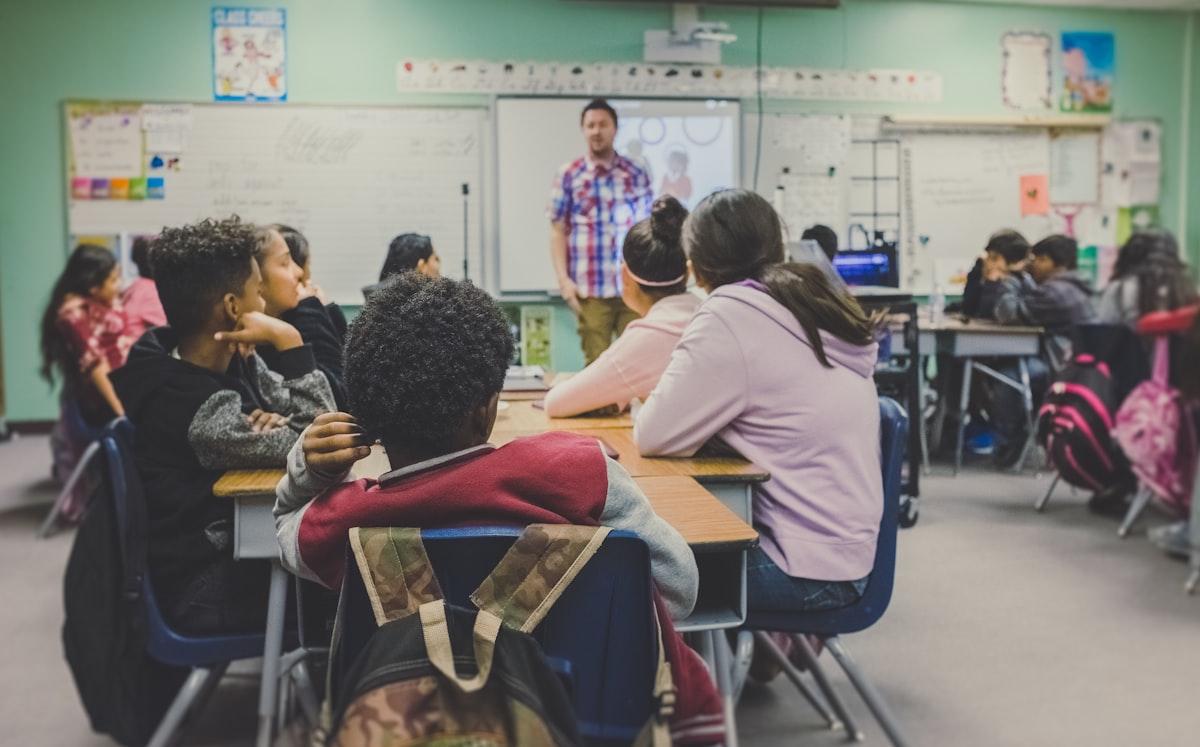
Photo by Vitaly Gariev on Unsplash
What a check-in sounds like in practice
It helps to see the actual shape of one of these exchanges rather than a description of it. Here is a shortened version of a real pattern from a middle school history unit on the causes of World War I.
- System: "You wrote that alliances caused the war to spread quickly. Can you explain what you mean by that?"
- Student: "Like, countries had to help each other because they signed treaties, so one small fight turned into a big war."
- System: "Good. Can you name one specific alliance and explain which countries it pulled into the conflict?"
A student who read and understood the material can usually answer that second question without much trouble. A student who copied a summary paragraph often cannot, not because they are dishonest exactly, but because the specific detail was never theirs to begin with. That is the whole mechanism in miniature, and it is why this kind of check-in tends to take under two minutes per student rather than the ten or fifteen a full oral exam would need.
What the research says about verbal explanation
None of this is a new idea dressed up in new software. A 2025 study in Educational Researcher makes the case that oral exams test depth of understanding in ways written tests often cannot, precisely because a student has to construct an answer live rather than recognize or reproduce one. Edutopia has reported similar findings, noting that oral assessments let teachers assess deeper understanding while giving students immediate feedback, something a graded paper returned a week later cannot really offer.
The honest limitation is logistics. A full oral exam for every student on every unit is not realistic for a teacher with five sections a day, which is exactly the gap adaptive, software-run check-ins are built to close. They are not a replacement for a teacher's own judgment or for a real conversation when one is warranted. They are a way to get a little bit of that signal, consistently, without adding hours to a Friday.
Frequently asked questions
What is an AI oral assessment?
It is a short, spoken exchange where a student answers a question out loud and receives an adaptive follow-up question based on their specific response, rather than a fixed script or a written quiz read aloud.
How is an AI oral assessment different from a recorded explanation tool?
A one-shot recorded explanation captures a single answer with no follow-up. An adaptive oral assessment asks a second question shaped by what the student actually said, which is what makes it harder to prepare a scripted response for in advance.
Does an AI oral assessment replace written assignments?
No. It works best layered on top of existing writing or lab work as a quick verification step, not as a standalone replacement for written assessment.
How long does a typical AI oral check-in take?
Most check-ins run one to two minutes per student, short enough to use after most lessons without eating into instructional time.
What grade levels is AI oral assessment appropriate for?
It is generally used with students in grades six through twelve, where students can hold a short spoken conversation about content independently.
A follow-up question is a small thing to add to a lesson, and that is part of the point. It does not require new policies or new software training for students, just a couple of minutes where a student has to say what they mean. See how ArticulAI works.