
Productive struggle vs frustration: what's the difference?
Productive struggle vs frustration comes down to one question: is the student still doing something with the difficulty, or has she quietly stopped? A student in productive struggle stays engaged, generating new attempts as the pace slows. A student who has crossed into frustration disengages, stopping cold or asking for help too soon.
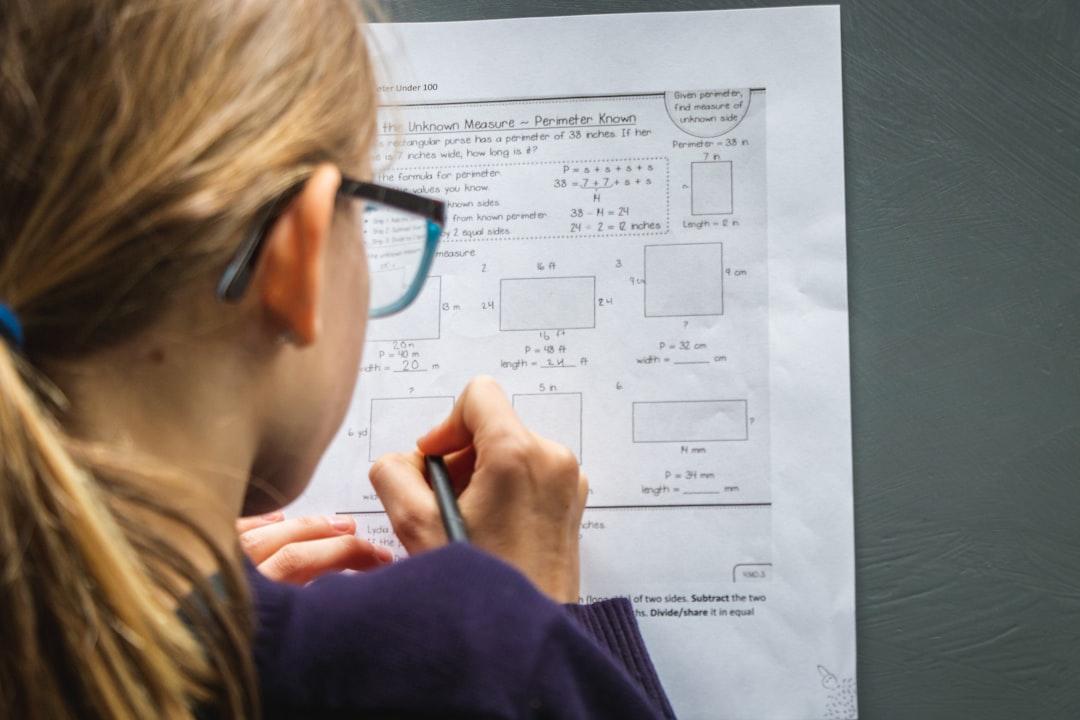
Picture a sixth-grade pre-algebra class, second period, right before lunch. Jordan is on problem four of a worksheet on solving for x, stuck on the same line for six minutes. But she is muttering the steps under her breath, checking her work against problem three, and trying a different move on the next line. That is what productive struggle looks like from the outside: slow, quiet, and easy to mistake for nothing happening.
Barbara Blackburn calls this a learner's sweet spot between scaffolding and support: hard enough to require real effort but not so hard a student has no way in. This piece on why productive struggle drives learning covers the fuller case for the discomfort. A study that coded 186 real struggle episodes in middle school math classrooms found teachers kept struggle productive by holding cognitive demand steady while responding to what the student was actually thinking, not by lowering the bar the moment things got quiet (read the study). Jordan does not need an easier problem, just about 90 more seconds.
What are the warning signs a student has crossed into unproductive frustration?
Marcus sits two seats over, working the same worksheet. He has erased the same line four times and is now doodling in the margin instead of writing. On paper, both Jordan and Marcus look stuck, but in the room they are doing completely different things, worth checking against the same signals every time, the way you'd check for genuine active engagement versus passive completion anywhere else in your room.
| Signal | Jordan (productive struggle) | Marcus (frustration) |
|---|---|---|
| Pace of attempts | Slow but keeps producing new lines of work, roughly one new attempt every minute or two | Has not written anything new in several minutes |
| Self-talk and muttering | Narrating her own thinking, even quietly | Gone silent, or muttering has shifted to a flat "I don't get this," repeated without variation |
| Eraser and redo pattern | Erases and revises specific steps, each attempt slightly different from the last | Erases the same line repeatedly without changing his approach, or replaces it with nothing |
| Response to a check-in question | Can describe what she has tried, even the parts that did not work | Shrugs, says "nothing," or gives an answer that does not match what is on his page |
| Body language | Leaned in, pencil moving, eyes on her own paper | Pushed back from the desk, scanning the room, or holding something unrelated |
None of these signals is decisive alone. A student can go quiet for a few seconds while thinking something through; that is not shutting down. What matters is the pattern across signals, not any single moment you catch walking by.
How long should you let a student struggle before stepping in?
There is no universal timer, but reserve real struggle for the handful of ideas per unit worth the discomfort, not every problem on every worksheet. If students sit with difficulty on everything, they stop trusting it means anything, and the strategy stops working.
A stalled-but-trying kid earns more time than a shut-down one. Jordan, still generating attempts at minute six, can go another minute or two. Marcus, doodling by minute three, needed a check-in two minutes ago. Most teachers step in too early, worried a quiet room means nothing is happening, when quiet is often exactly what real thinking sounds like.
This is a heuristic, not a rule. A kid with an unaddressed skill gap, untreated anxiety, or an IEP calling for more frequent check-ins may need support well before the "let them sit in it" version of this advice would suggest. Your read on the specific student outweighs any fixed time limit.
What should you actually say when you decide to step in?
When you step in, resist the instinct to just explain the answer. A single well-placed follow-up question often reveals whether a student is genuinely stuck or just needs another 30 seconds, keeping the thinking in the student's hands instead of yours. Three questions cover most situations, asked one at a time, with room to answer before moving on.
- "What have you tried so far?"
- "What happens if you try that part again?"
- "Where exactly did it stop making sense?"
That third question does the most work. It forces a student to locate the actual point of confusion instead of writing off the whole problem, telling you whether you face a small gap or a bigger one. It's the same diagnostic instinct behind ArticulAI's adaptive probing, which asks a student a single follow-up question mid-answer to find where an explanation breaks down, borrowed here for a moment without a tool on hand.
If you want that same kind of adaptive probing happening automatically, for every student's spoken or written answer, you can see how it works at articulai.app.